么么哒
Why China's favorability is rising across the Global South_我的网站

A |
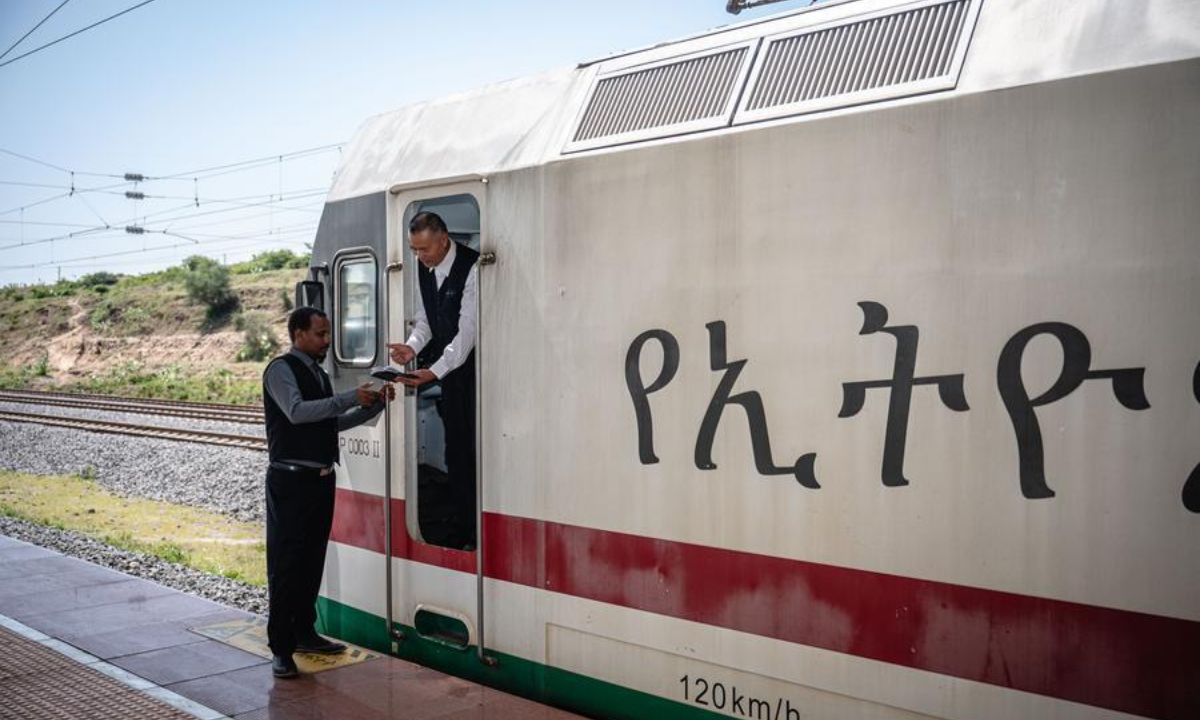
A local train driver receivs a notebook from his Chinese predecessor at the Adama station in Adama City, Ethiopia, Sept. 9, 2023. (Xinhua/Wang Guansen)The global perception landscape is changing. For decades, the United States occupied a dominant position in international public opinion. The latest Pew Research Center survey, however, points to a notable turning point: for the first time in more than two decades, China is viewed more favorably than the United States across a larger number of countries.
What explains China's growing appeal?
For many developing countries, China offers a practical development partnership centered on infrastructure, investment, industrialization, technology transfer and trade. Rather than prescribing a single pathway to modernization, it has generally emphasized allowing countries to pursue development in line with their national priorities.
One reason China's influence has grown is that its development model is highly visible. From Ethiopia's railways to Pakistan's power plants, Chinese-financed projects address everyday development challenges by improving transport, energy security and connectivity. Through the Belt and Road Initiative, China has mobilized nearly 1 trillion U.S. dollars in infrastructure investment, producing projects that citizens can see, use and associate with economic progress.
The distinction lies not only in the scale of investment but also in the evolving priorities of development cooperation. While many Western partners have increasingly emphasized economic security, strategic de-risking, private-sector mobilization and governance reform, China has combined large-scale investment in physical infrastructure with technology transfer, industrial cooperation and human capital development.
At the same time, China has actively promoted trade by expanding market access, including granting zero-tariff treatment to many least-developed countries, deepening currency-swap arrangements, and encouraging the use of local currencies in cross-border trade. Together, these measures seek to strengthen economic connectivity, reduce transaction costs and exchange-rate risks, and create new opportunities for developing countries to integrate into regional and global value chains.
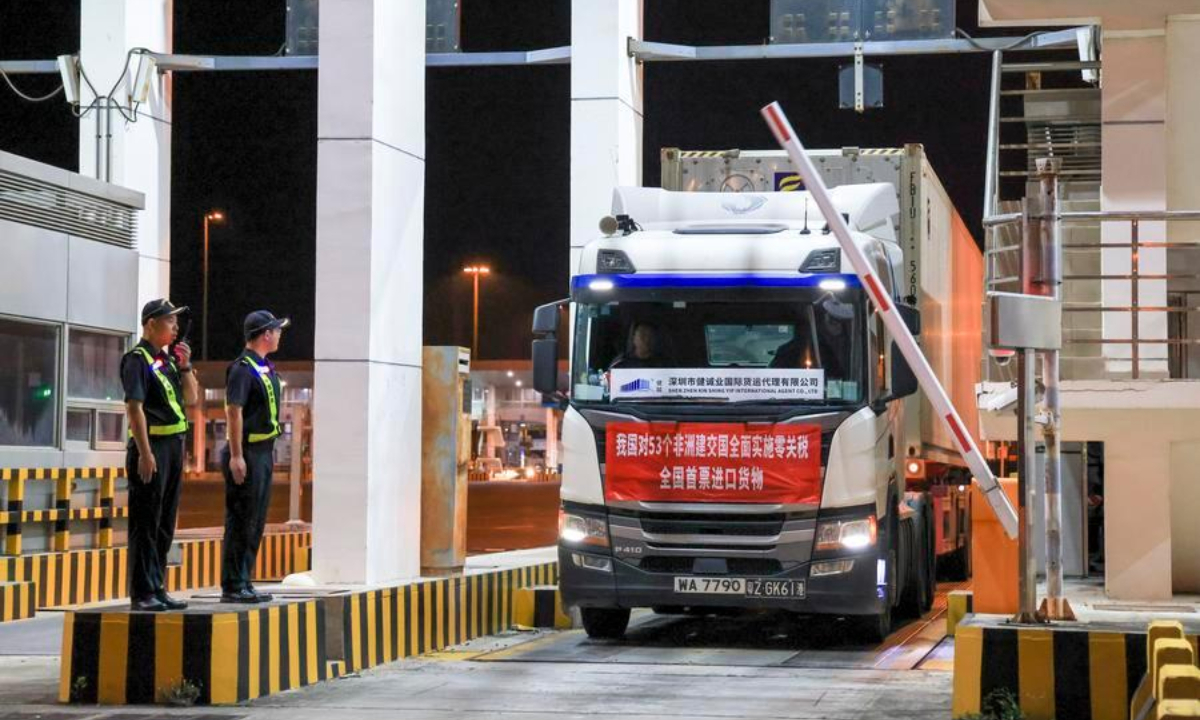
A container truck, transporting the first batch of imports under China's expanded zero-tariff treatment to 53 African nations, enters Shenzhenwan Port in Shenzhen, south China's Guangdong Province, May 1, 2026. (Xinhua/Mao Siqian)
This integrated approach has produced tangible improvements in productivity, connectivity and local capacity, reinforcing perceptions of China as a long-term development partner.
Equally important is the philosophy underpinning China's engagement. Beijing consistently emphasizes sovereignty, mutual respect and non-interference, maintaining that every country should determine its own political and development path. For many governments across the Global South, this approach is a partnership based on equality rather than political conditionality, allowing them greater policy space to pursue domestic development priorities.
Diplomatic style has also influenced perceptions. Through mechanisms such as the Forum on China-Africa Cooperation and regular engagement with Pacific Island countries, China has committed itself to equality and shared development. For many governments in the Global South, that sense of respect and recognition is not merely symbolic -- it contributes to long-term political trust.
Perhaps the most important nuance is this: the Global South is not becoming anti-American; it is becoming strategically pragmatic. Its foreign policy decisions are increasingly guided by national interests, economic opportunity, and development priorities rather than Cold War-style geopolitical alignment.
The Global South's primary ambition is neither ideological nor geopolitical -- it is developmental. Governments want to create jobs, eliminate poverty, modernize infrastructure, strengthen industrial capacity and improve the quality of life for their citizens. China's transformation over the past four decades, from lifting hundreds of millions of people out of poverty to becoming a global leader in infrastructure, manufacturing and technology, has demonstrated what sustained long-term planning can achieve. Consequently, many developing countries are looking to China not as a model to replicate wholesale, but as a development partner from which they can learn, cooperate and pursue shared prosperity while preserving their own policy autonomy.
This contrast is also reflected in broader policy priorities. At a time when many Western governments are increasingly emphasizing tariffs, export controls, technology restrictions, sanctions and economic security, China has continued to promote infrastructure investment, trade, industrial cooperation, technology partnerships, open-source AI initiatives and greater access to its domestic market. Whether one agrees with either approach or not, many developing countries evaluate partnerships primarily through the lens of economic development and tangible outcomes. That difference in emphasis is helping reshape global perceptions.
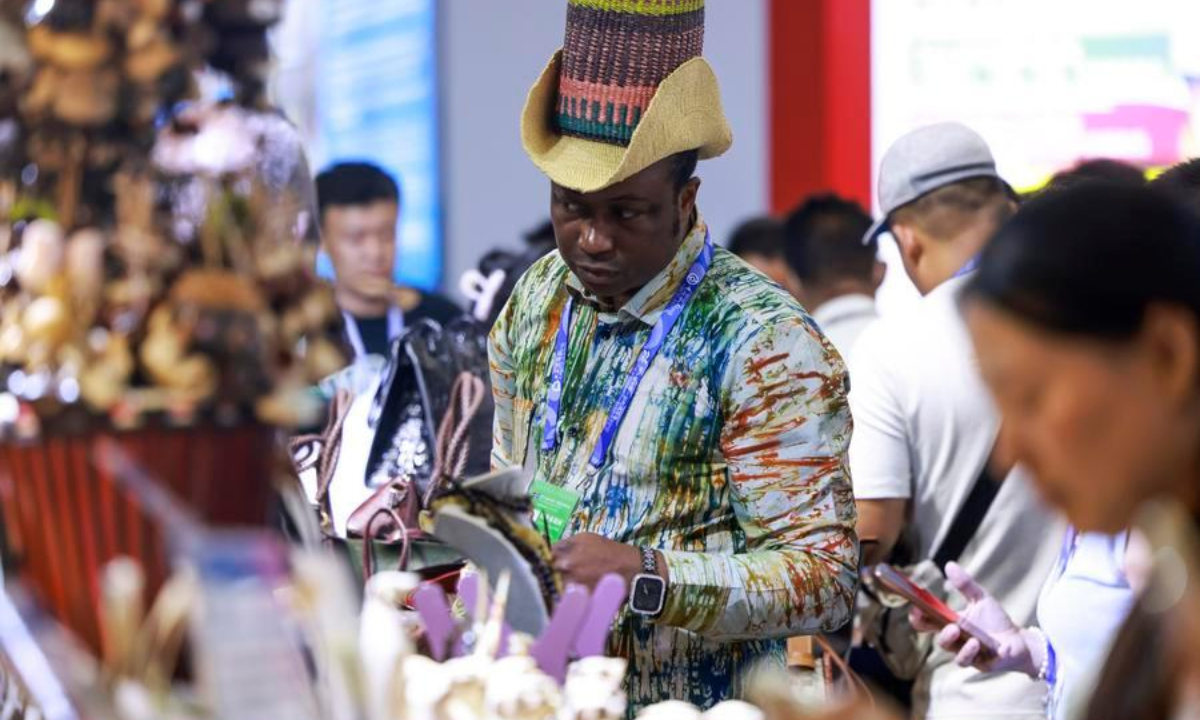
A staff member arranges exhibits at the booth of Nigeria during the 9th China-Eurasia Expo in Urumqi, capital of northwest China's Xinjiang Uygur Autonomous Region, June 25, 2026. (Xinhua/Wang Fei)
The world is changing, and the transition toward a more multipolar international order is becoming increasingly evident. The Global South is no longer a passive participant in world affairs. Its countries are exercising greater strategic autonomy, making decisions according to their own national interests, development priorities and the aspirations of their people. In China, developing countries have found a true friend and good partner.
Editor's note: Maya Majueran serves as the director of the Belt and Road Initiative Sri Lanka, an independent and pioneering organization with strong expertise in Belt and Road Initiative advice and support.
。

B | 夸夸会、小哥圆桌会、青年实践课堂……每日商报讯 “送你一朵小红花,开在你心底最深的泥沙……”伴着温柔的歌声,建德市杨村桥镇互助长宁片区新时代文明实践总站负责人夏云走上2026年杭州市新时代文明实践项目展示交流活动的舞台,带来了乡村善治样板项目“夸夸会”的生动分享。

C | 长宁村曾是典型空心村,青壮年常年外出经营草莓产业,村内留守老人居多,日常缺少陪伴照料。2022年,立足村内传承70年的互助传统,创新推出“夸夸会”特色载体,以邻里互相夸赞的温情形式激活民间善意,搭建起群众说事、邻里点赞、互帮互助、榜样引领的基层治理闭环。“除每季一场集中夸夸会,我们配套建立每月互助日、村级互助洗衣房等常态化服务,同步推出积分兑换、村民荣誉馆、大中小三级互助圈长效保障机制。”夏云介绍,项目落地四年以来,全村累计挖掘好人好事270余件,曾经负债、治理薄弱的村庄,如今蜕变为片区善治示范标杆。“夸夸会”的暖心故事,是杭州全域新时代文明实践创新探索的鲜活缩影。在昨天的2026年杭州市新时代文明实践项目展示交流活动中,52个辨识度高、紧贴文明实践阵地建设的入围项目进行展示交流。这些项目聚焦学习实践科学理论、宣传宣讲党的政策、丰富活跃文化生活、培育践行主流价值等重点工作,构建起包含理论宣讲、助力共富、移风易俗、暖心服务、优质文化资源直达基层在内的多元内容体系,充分展示杭州市新时代文明实践工作的生动实践与亮眼成效。外卖小哥、“小哥圆桌会”发起人彭清林介绍,上城区“小哥圆桌会”文明善治项目。聚焦外卖骑手、快递员等新就业群体急难愁盼,由骑手自发组建自治议事平台,每月开展圆桌座谈,联动人社、公安、城管、工会等多部门面对面倾听诉求、解决难题。

D | “最近高温天,我们聚焦小哥爱心驿站,配备直饮水、制冰机、环保饮水物资落实高温关怀。

E | ”青少年社会实践赛道同样亮点纷呈。杭报集团带来了“文明实践真有样——我在文明实践阵地过寒暑假”主题活动的分享,杭州日报记者、项目负责人之一王泽英介绍:“杭州日报一直深耕青少年社会实践领域。2024年底,‘青爱的杭州’大学生社会实践联盟正式成立。”在吴山广场文明实践点位,特殊教育学校学生为社区老人开展推拿志愿服务,学子坦言在校苦练两年技能,终于有机会实实在在服务群众,朴素话语尽显青年志愿初心;文明阵地同样成为中外文化交流窗口,西湖区金鱼井社区连续第三年落地“中美十万强”文化交流活动,70余名中外师生走进现代化社区,沉浸式感受中国式现代化建设实景,向外生动讲述杭州发展故事……“短短两年,联盟吸纳全国28个省区市148所高校、2600余支实践团队、7万余名大学生参与,充分盘活寒暑假青年力量。

F | ”王泽英说。近年来,杭州市持续深化新时代文明实践体系建设,坚持以项目化引领,推动文明实践向精准化、常态化、便利化、品牌化迈进。下一步,杭州将持续发掘基层优质文明实践载体,孵化培育并广泛推广一批群众喜闻乐见、具备较强社会影响力的特色项目,持续深耕“浙江有礼・最美杭州”市域文明新实践品牌,让文明新风浸润杭城每一处角落。
Current article:http://1nlo32.dinggaxilianmaiyuejienianguai.shop/bc9/0150rz.html
Published on:13:20:00
 南宁市发布通告:受洪水影响 部分区域进入紧急防汛期
火柴人
南宁市发布通告:受洪水影响 部分区域进入紧急防汛期
火柴人
 读秒绝杀!这支国足赢了
绅士的品格
读秒绝杀!这支国足赢了
绅士的品格
 去哪儿旅行网,贵阳万颐国际酒店(观山湖公园林城西路地铁站店)霸王条款扣款
万水千山总是情
去哪儿旅行网,贵阳万颐国际酒店(观山湖公园林城西路地铁站店)霸王条款扣款
万水千山总是情
 存储器合约价飙升!预计2027年占CSP主要支出比重68%
我亲爱的小冤家
存储器合约价飙升!预计2027年占CSP主要支出比重68%
我亲爱的小冤家
 安全生产进行时 秋收时节,这些事不要做→
生化危机
安全生产进行时 秋收时节,这些事不要做→
生化危机
 8月26日龙虎榜复盘:立新能源净买额居首
溏心风暴
8月26日龙虎榜复盘:立新能源净买额居首
溏心风暴

 微信
微信 移动端
移动端